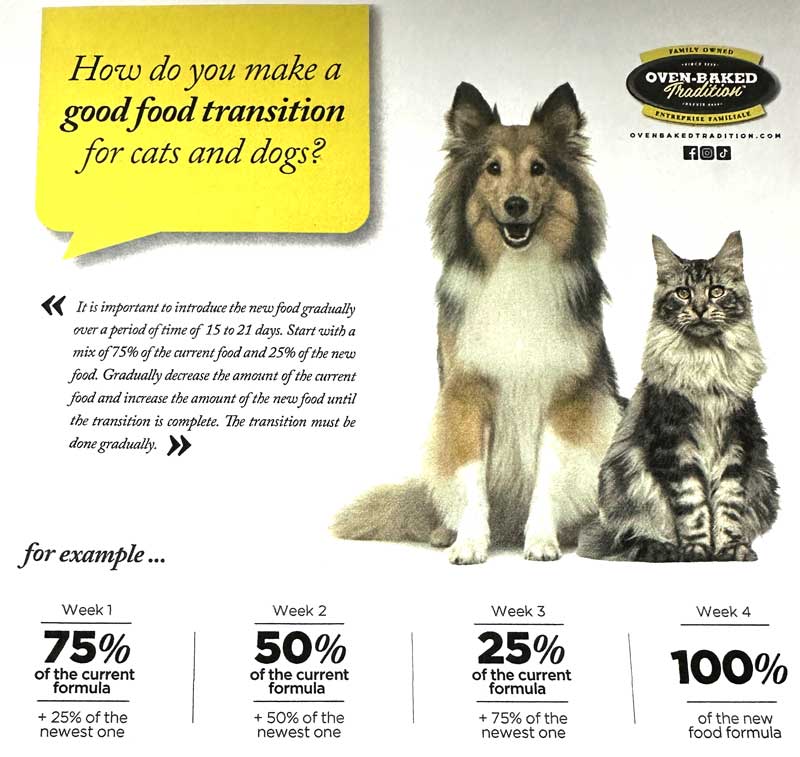
How do you make a good food transition for cats and dogs?
Once your pet has received 100% of its new food, continue the feeding for at least 1 month to see if there is any changes. If they keep a stable weight, have a shiny coat, have-no skin problems, no stomach issues, and good stool quality, you may continue with this food. If you decide to change the formula for an all-life stage recipe, make sure you proceed in the same way. Otherwise, abruptly changing food with cats and dogs can cause diarrhea.
In fact, when the ingredients in food differ from the usual diet, it can lead to “food shock”, as their microbiota hasn’t had enough time to get used to the new food. In that case, a dog’s digestive system is unable to properly digest this new food to which it is not accustomed. This leads to accelerated digestive transit and water secretion in the feces. This is why rapid changes in food often result in diarrhea.
But Be Careful … There are several different causes of diarrhea with cats and dogs, for example the presence of parasites, bacterial or viral infection, diet (excess, sudden change, intoxication, table food etc.) or other illnesses.